

"Should I book a microdermabrasion or a chemical peel?" is one of the most common questions our estheticians get from new clients in Toronto and the GTA. Both treatments are described as exfoliating facials. Both promise smoother, brighter skin. Both have been offered in spas for decades. So why are they priced differently, why do they feel completely different on the skin, and why does one leave you peeling for a week while the other has zero downtime?
The short answer: they exfoliate in fundamentally different ways, reach different layers of skin, and solve different problems. The wrong choice will not hurt you, but it might mean you spent your facial budget on a treatment that does not actually address what you came in for. This guide walks through the mechanism, the indications, the downtime, the cost, and a clear decision matrix from licensed estheticians at our Etobicoke clinic.
The 30-Second Summary
Microdermabrasion is mechanical: a diamond-tipped wand and vacuum suction lift away the outermost layer of dead skin. No downtime, immediate glow, best for dullness, surface congestion, and pre-event refreshes. Chemical peels are chemical: an acid solution dissolves the bonds between dead cells so they shed in the following days. Some downtime, deeper results, best for melasma, post-acne marks, fine lines, and longer-term skin remodelling.
How the Two Treatments Actually Work
The single most important difference between microdermabrasion and a chemical peel is the mechanism. Once you understand that, everything else follows: who they help, how long results last, and why combining them needs to be planned carefully.
Microdermabrasion: Mechanical Exfoliation
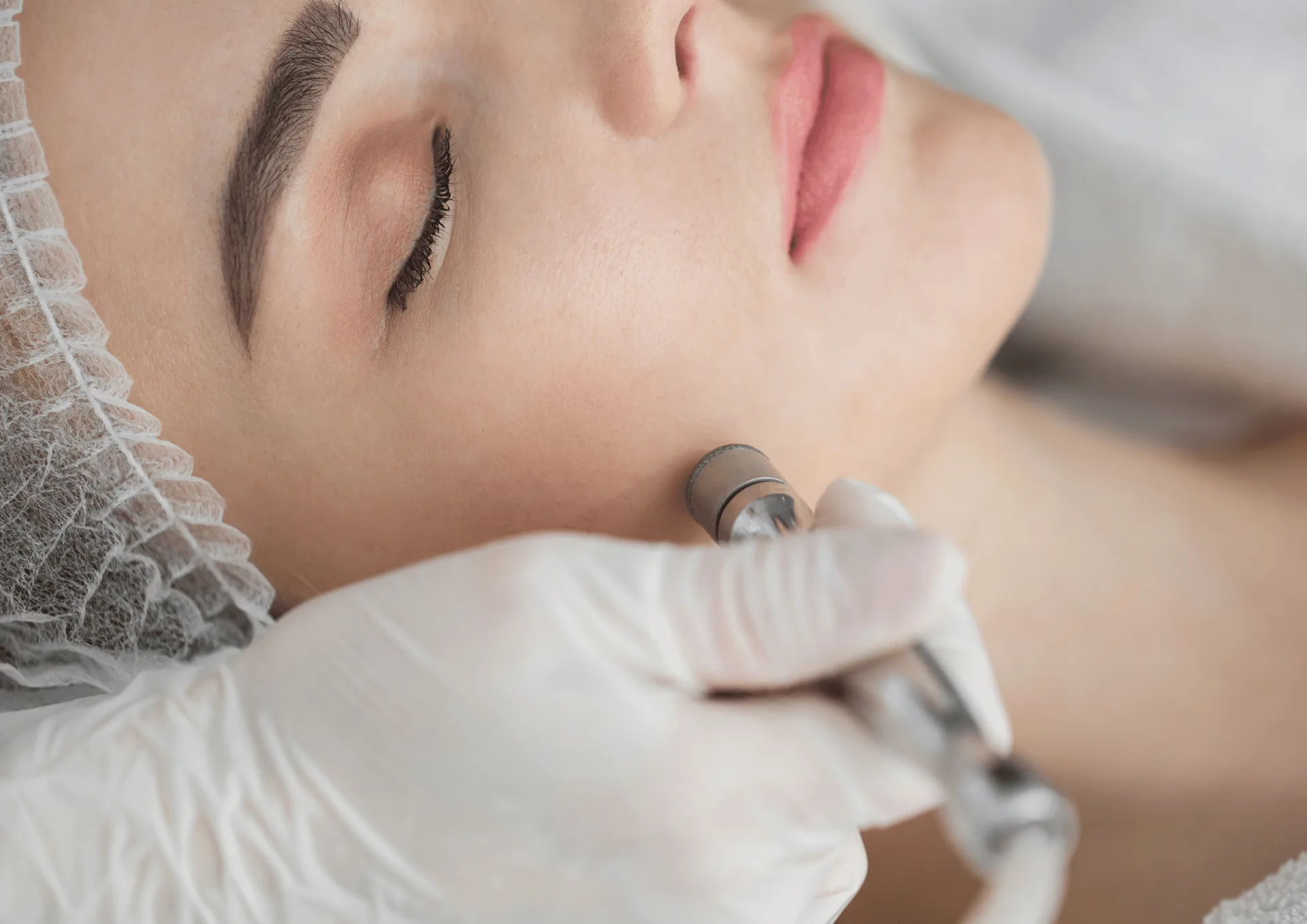
Microdermabrasion is a physical treatment. A diamond-tipped wand passes over your skin in light, controlled strokes while a built-in vacuum applies gentle suction. The wand removes the outermost layer of the stratum corneum, the dead-cell layer at the very surface of your skin, while the suction lifts away the loosened debris and trapped material from pores. Older crystal systems sprayed micro-fine aluminium oxide crystals to do the same job, but most modern professional clinics in Canada have moved to diamond-tip technology because it is more even, cleaner between clients, and gentler.
Because microdermabrasion is purely mechanical, it stops at the dead-cell layer. It does not penetrate into the living epidermis or the dermis. That limits how dramatic the change can be, but it also means there is almost no recovery period. The skin you walk out with is the skin you came in with, minus a thin layer of debris and dead cells.
Chemical Peels: Controlled Chemical Exfoliation
A chemical peel applies an acid solution to the skin for a controlled period of time. The acid does not "burn" the skin in any dangerous sense at standard cosmetic strengths. Instead, it dissolves the protein bonds (called desmosomes) that hold dead cells together. Once those bonds break, the dead layer lifts off over the following days, either invisibly or with visible flaking depending on peel depth.
The depth of a peel depends on the acid used and its concentration. Light peels (lactic acid, mandelic acid, low-percentage glycolic acid) only affect the stratum corneum, similar to microdermabrasion in depth but achieved chemically. Medium peels (higher percentage glycolic, TCA in lower percentages, Jessner's solution) reach into the upper epidermis. The Green Peel herbal treatment we offer is a botanical exfoliation system that sits in the light-to-medium range, depending on application level. Deeper peels (high-percentage TCA, phenol) reach the dermis and are not typically performed in spa settings.
Because chemical peels can be calibrated for depth, they can address concerns that sit below the surface, like deeper pigmentation, fine lines, and active acne. This is the fundamental advantage they have over mechanical exfoliation.
What Each Treatment Is Best For
The mechanism difference translates directly into which skin concerns each treatment solves well. Here is what we recommend in clinic, based on what each can actually do:
Microdermabrasion Wins For
- Dullness and flat tone from cumulative dead-cell buildup, especially after winter or a stressful season
- Clogged or congested pores on the nose, chin, and forehead where the vacuum suction does the most
- Surface texture, the bumpy or rough feel after months of skipping exfoliation
- Pre-event glow for weddings, photoshoots, anniversaries, when you need a refresh without any flaking risk
- Skincare absorption, when you want to make your home serums and retinoids work harder
- First-time facial clients who want a low-commitment introduction to professional skin care
Chemical Peels Win For
- Hyperpigmentation including melasma, sun spots, and post-acne marks that microdermabrasion only partially fades
- Fine lines from sun exposure or early aging, where deeper exfoliation triggers more meaningful turnover
- Active mild to moderate acne, especially with salicylic-based peels that penetrate into oil-filled pores
- Uneven skin tone with multiple causes layered on top of each other
- Longer-lasting brightness, since deeper exfoliation pushes new cells to the surface for weeks
- Long-term collagen stimulation, when results need to compound over time
If your concern is on both lists, that is not unusual. Most skin has more than one issue going on. That is where a treatment plan, often combining both treatments at safe intervals, makes more sense than picking just one. We will come back to that.
The Sensation: What They Feel Like on the Skin
Many people are nervous about facials they have not had before. Knowing what each treatment feels like helps you set expectations and decide what you can tolerate.
Microdermabrasion Sensation
Almost everyone describes microdermabrasion as a light scratching feeling, often compared to a cat's tongue passing over the skin. The vacuum suction adds a mild pulling sensation. There is no heat, no burning, no chemical tingling. The first time it can feel unusual, but within a few minutes most clients relax and find it pleasant. If anything ever feels uncomfortable, the esthetician can ease pressure or skip an area.
Chemical Peel Sensation
Chemical peels feel different. Most clients report tingling, warmth, or a mild burning sensation that begins about 30 seconds after the acid is applied and builds for the first minute or two before plateauing. The intensity depends on the peel: a gentle lactic acid peel feels like mild warmth, while a stronger glycolic or TCA peel can feel like a noticeable burn. We use cool air, a hand-held fan, or neutralizing solution to keep the sensation manageable. The active sensation typically lasts 5 to 10 minutes during the treatment itself, then fades.
If you have low pain tolerance or are sensitive to skincare actives, this is something to discuss with your esthetician at the consultation. Most people tolerate professional peels well, but the experience is meaningfully different from a microdermabrasion.
Downtime: What Happens After You Leave
This is often the deciding factor for clients who have a wedding, work event, or holiday on the calendar. Here is the realistic recovery for each.
After Microdermabrasion
Immediately to a few hours
Mild pinkness, similar to a flush from exercise. Skin feels smooth and tight. Can apply makeup if desired, though most clients prefer to skip it for the day.
Day 1 to 2
Pinkness fully resolved. Skin feels softer than before. Glow is visible.
Day 3 to 7
Continued smoothness as natural cell turnover settles. Skincare products absorb better. No peeling, no flaking, no visible recovery signs.
After a Chemical Peel
Immediately to 24 hours
Skin looks pink to red, similar to a sunburn. Feels tight, slightly warm. No makeup for the first 24 hours. Apply only the prescribed gentle moisturizer and broad-spectrum SPF 30 or higher.
Day 2 to 3
Redness fades. Skin may feel dry and tight as the dead layer begins to lift. Light peeling can start at the edges of the treated area.
Day 3 to 7
Visible peeling phase. The intensity varies by peel depth. Light peels produce barely visible flaking; medium peels can produce sheet-like peeling on the face and chest. Do not pick.
Day 7 to 14
Peeling resolves. Fresh skin underneath is visibly brighter, more uniform, with reduced pigmentation. SPF stays mandatory for the full month after.
If you have a high-stakes event in the next 10 days, microdermabrasion is the safe choice. Chemical peels need 2 to 3 weeks of buffer before any event where you cannot have visible flaking.
Cost and Frequency
Pricing varies by clinic, depth, and city. The pattern below is typical for the Toronto and GTA market and approximately matches what you will see at most reputable spas in Etobicoke and Mississauga.
Microdermabrasion is generally the lower-cost-per-session option. A typical clinic in the GTA charges in a range that fits comfortably into a monthly skincare budget. The recommended schedule for visible cumulative results is 4 to 6 sessions spaced 2 to 4 weeks apart, then a maintenance session every 2 to 3 months. Many of our clients build microdermabrasion into their regular skincare cadence the way you might schedule a haircut.
Chemical peels are typically priced higher per session because of the depth, the active ingredients, and the recovery support involved. The series is shorter (often 3 to 4 sessions spaced 4 to 6 weeks apart for a target concern like melasma) but each session costs more. Because the results are deeper and last longer per session, the per-month cost can end up similar to a microdermabrasion series.
Anagenesis publishes live pricing in the Fresha booking system for both services, so you can see exact rates before you book. For specific quotes for series packages, call the clinic.
Combining Microdermabrasion and Chemical Peels Safely
Many clients in Toronto and the GTA assume they have to pick one. They do not. The two treatments work well together when they are spaced and sequenced properly. The combination is sometimes called a "double exfoliation" or "epidermal level treatment", though that name is misleading because the treatments are not done in the same session.
A Safe Combination Pattern
A common 12-week plan: chemical peel (week 1), recovery and skincare regimen (weeks 1 to 3), microdermabrasion (week 4) to refresh the surface after peeling has fully resolved, microdermabrasion (week 8) for maintenance, second chemical peel (week 12) to deepen results. Your esthetician adjusts based on how your skin responds.
What does not work is doing both treatments in the same week. Both exfoliate. Stacking them too close together strips the skin barrier, causes prolonged redness, raises the risk of post-inflammatory hyperpigmentation (especially in deeper skin tones), and can leave the skin sensitive for weeks. We will not stack treatments in clinic, and you should be cautious of any provider who offers to.
The Decision Matrix
Here are six common scenarios from real clients in our Etobicoke clinic, with our recommendation for each.
"I have a wedding in 2 weeks and want to look my best"
Recommendation: Microdermabrasion. Zero risk of visible peeling on the day. Book one session 7 to 10 days before the wedding for maximum glow without any recovery worry. Skip any peel within 3 weeks of the event.
"I have melasma that's gotten worse this year"
Recommendation: Chemical peel series. Melasma is a deeper pigmentation issue that needs chemical exfoliation, combined with a strict daily SPF routine and tyrosinase-inhibiting actives at home. Microdermabrasion alone will not move the needle. See our acne scars and dark spots guide for a more detailed melasma section.
"My skin just feels dull and flat all the time"
Recommendation: Start with microdermabrasion. Surface dullness is exactly what mechanical exfoliation solves. Book a series of 4 to 6 sessions and reassess after the third. If you want even more brightness afterwards, add a chemical peel.
"I have post-acne marks that won't fade"
Recommendation: Light chemical peel series. Post-inflammatory hyperpigmentation responds well to gentle, repeated peels combined with SPF and antioxidants at home. You can add microdermabrasion sessions in between to maintain surface brightness.
"I want to start exfoliation but I'm nervous about peeling"
Recommendation: Microdermabrasion. It is the lowest-commitment professional exfoliation. No peeling phase, no recovery surprises. After 2 to 3 sessions, if you want stronger results, your esthetician can introduce a very light peel.
"I have congested skin and recurring blackheads"
Recommendation: Both, in a planned series. Start with a salicylic-based chemical peel to penetrate into the pores, follow with microdermabrasion 4 weeks later to physically clear out the loosened material. Pair with a home routine that includes salicylic acid 1 to 2 times per week.
Who Should Avoid Each Treatment
Both treatments are non-invasive and generally safe, but there are conditions where one or both should be postponed. Always be honest about your medical history at the consultation.
Contraindications At-A-Glance
Skip Microdermabrasion If
- Active acne breakout or skin infection in the treatment area
- Sunburn or recent burn within 2 weeks
- Currently on Accutane, or stopped within 6 months
- Active rosacea flare-up
- Recent injectables or laser in the area (within 2 weeks)
- Open cuts, cold sores, or undiagnosed lesions
Skip Chemical Peels If
- Pregnant or breastfeeding (most peels)
- Currently on Accutane, or stopped within 6 to 12 months
- Active cold sore outbreak or history of frequent cold sores (without antiviral prep)
- Active eczema, dermatitis, or psoriasis in the treatment area
- Used topical retinoids in the last 5 to 7 days
- Significant recent sun exposure or tan
- Open wounds or undiagnosed skin lesions
What This Looks Like in Practice at Anagenesis
Our Etobicoke clinic at 411-190 Sherway Dr offers both microdermabrasion and a range of chemical peel options including light glycolic and lactic acid peels and the Green Peel herbal botanical system. We are easily accessible from Toronto, Mississauga, Oakville, and across the Greater Toronto Area, with free on-site parking near Sherway Gardens.
Every new client gets a skin assessment at the start of their first visit, regardless of which treatment they booked. If you book a chemical peel and the assessment suggests microdermabrasion would serve you better right now (or vice versa), we will tell you. The same applies if your skin needs to settle for a few weeks before either treatment makes sense, for example after recent retinoid use or recent sun exposure.
Ready to Book? Start Here
If you want a low-commitment refresh with no downtime: book a microdermabrasion. If you want deeper change for pigmentation, fine lines, or persistent acne marks: book a chemical peel. If you are not sure which is right for you, book a consultation and we will assess your skin in person before recommending a plan.
Other services that may be relevant to your concerns: microchanneling for deeper textural concerns and LED light therapy for acne and inflammation support.
Frequently Asked Questions
If dullness is your only concern and you want zero downtime, microdermabrasion is the simpler choice. Both treatments improve dullness, but microdermabrasion does it through mechanical exfoliation with no peeling phase afterwards, while a light chemical peel produces longer-lasting brightening at the cost of a few days of flaking.
No. Both treatments exfoliate the skin and combining them too closely can cause irritation, prolonged redness, or hyperpigmentation. A safe combination plan typically spaces them at least 2 weeks apart, with the chemical peel first and microdermabrasion as a follow-up for maintenance once peeling has fully resolved.
Chemical peels generally have a stronger effect on fine lines because they can penetrate deeper than mechanical exfoliation. Microdermabrasion softens the look of very superficial lines but does not affect deeper wrinkles. For meaningful change in expression lines, consider a medium-depth chemical peel or pair microdermabrasion with microchanneling.
Both can be safe in darker skin tones when performed by experienced estheticians who adjust intensity. Microdermabrasion is more forgiving because it does not involve a chemical reaction that can trigger post-inflammatory hyperpigmentation. Chemical peels in darker skin should start with the gentlest formulation and shorter contact times.
Both build cumulative results over a series. A single microdermabrasion produces a 1 to 2 week glow. A single light chemical peel produces 3 to 4 weeks of visible improvement. With a series of 4 to 6 sessions and ongoing maintenance, both can maintain visible improvement long term.
Yes. Anagenesis Beauty Clinic and Spa offers both microdermabrasion and chemical peels at our Etobicoke clinic near Sherway Gardens, easily accessible from Toronto, Mississauga, Oakville, and throughout the Greater Toronto Area. Free on-site parking is available.