

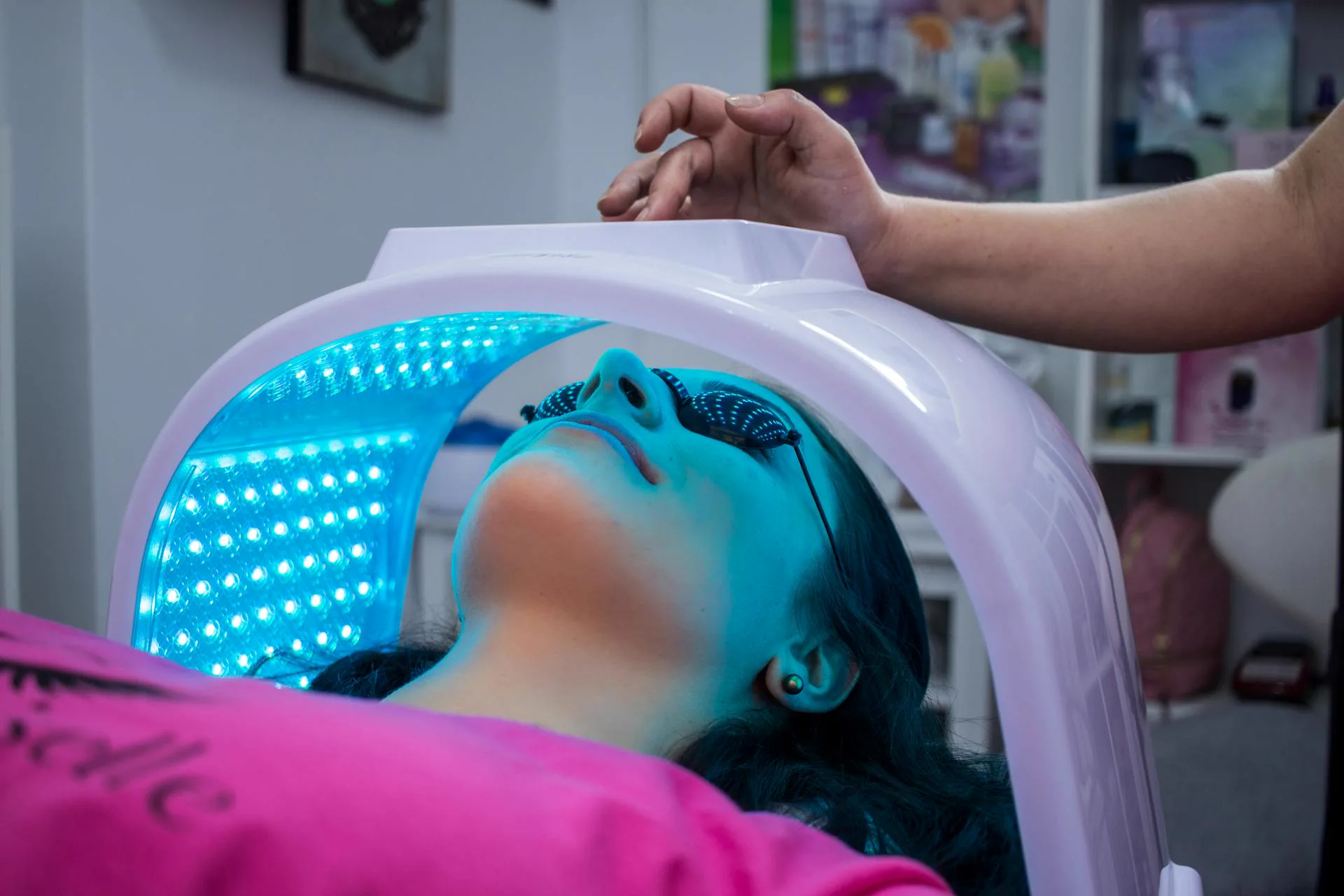
If you have spent any time researching acne treatments in Toronto, you have probably come across LED light therapy. The pitch is appealing: a non-invasive treatment that kills acne bacteria with light, no harsh chemicals, no downtime, no scrubbing. The reality is more interesting than the marketing suggests, and like most things in skincare, the right answer depends on what kind of acne you actually have.
This guide explains exactly what blue LED light therapy does to acne, what kinds of breakouts it addresses well, what kinds it does not, and how to combine it with the rest of a treatment plan for the best result. It is written by licensed estheticians at our Etobicoke clinic and reflects what we see in real client outcomes across Toronto and the GTA.
The 30-Second Summary
Blue LED at around 415 nanometres targets the bacteria responsible for inflammatory acne (Cutibacterium acnes) by triggering a chemical reaction inside the bacterial cells that destroys them. It works well for red, inflamed papules and pustules. It does not significantly affect closed comedones, deep cystic acne, or hormonally-driven breakouts. A typical series is 2 to 3 sessions per week for 4 to 6 weeks, paired with a gentle home routine and consistent SPF.
The Mechanism: How Blue Light Actually Kills Acne Bacteria
To understand why blue LED works on acne, it helps to know what acne actually is at the cellular level. Acne starts when a hair follicle gets clogged with dead skin cells and sebum (skin oil). This creates an oxygen-poor environment deep inside the pore. Cutibacterium acnes, a normally harmless bacterium that lives on everyone's skin, thrives in that environment. As it multiplies, your immune system reacts, and you get the red, inflamed bump everyone calls a pimple.
Blue light around 415 nanometres works because C. acnes bacteria produce molecules called porphyrins as part of their normal metabolism. Porphyrins absorb blue light very efficiently. When they absorb that light, they become excited and react with the oxygen inside the bacterial cell, producing reactive oxygen species (specifically singlet oxygen). Those reactive oxygen species damage the bacterial cell wall from the inside and kill the bacterium.
Here is what makes this clever: human skin cells do not produce porphyrins in any meaningful quantity. So the blue light passes through your skin and selectively destroys the bacteria without damaging the surrounding tissue. That is why LED light therapy has essentially no risk of skin injury at clinical doses, no peeling phase, and no downtime.
Why Wavelength Matters
Not all blue light is created equal. Wavelengths in the 405 to 420 nanometre range are absorbed by porphyrins most efficiently, with 415 nanometres often cited as the peak. Devices that operate outside this range, including most consumer-grade "blue light" gadgets, do not produce the same bacterial-killing effect because the light frequency does not match the absorption peak of the porphyrin molecule.
Clinical-grade panels used in licensed esthetician practice deliver precisely calibrated wavelengths at a power output high enough to reach the bacteria in the follicle. This is one of the differences between a professional session and an inexpensive at-home mask. The wavelength precision and the power delivered both matter.
What Blue LED Does Well
Blue LED is most effective for a specific category of acne. Knowing which category you have helps you decide whether this is the right treatment to start with.
Inflammatory Acne (Papules)
Red, raised bumps without a clear "head". These are full of C. acnes bacteria and immune response. Blue LED reduces the bacterial load and the inflammation around them, calming new breakouts and shortening the lifespan of existing ones.
Inflammatory Acne (Pustules)
Whiteheads with visible pus. Same bacterial driver as papules. Responds well to blue LED, especially when paired with a gentle salicylic acid routine at home to keep pores clear.
Adult and Stress Acne
Adult onset acne, particularly the kind that flares from stress, hormonal cycles, or mask-wearing, often has a strong inflammatory component that LED helps calm without the irritation of stronger actives.
Recurrent Mild Breakouts
If you tend to get a few inflamed spots every cycle but otherwise have clear skin, a maintenance schedule of blue LED can reduce the frequency without committing to oral medication or daily retinoids.
What Blue LED Does Not Do
This is the part the marketing often glosses over. Knowing what blue light cannot do is just as important as knowing what it can.
The Honest Limitations
Will Not Significantly Help
- Closed comedones ("under the skin" bumps)
- Open comedones (blackheads)
- Deep cystic or nodular acne
- Hormonal jawline acne flares
- Post-acne dark marks (PIH) or red marks (PIE)
- True acne scars (textural changes)
What Does Work for Those
- Comedones: salicylic acid peels, retinoids, microdermabrasion
- Cystic / nodular: medical dermatology referral, isotretinoin
- Hormonal: medical workup, possibly spironolactone or hormonal therapy
- PIH (dark marks): light chemical peels, microdermabrasion, daily SPF
- PIE (red marks): yellow/red LED, IPL referral
- Acne scars: microchanneling, fractional treatments, peels
If you have one of the conditions on the left side, blue LED alone is not the right starting point. It might still be a useful add-on, but the primary treatment needs to address the underlying cause.
Building a Realistic Blue LED Series
One session of LED therapy is pleasant. It is not transformative on its own. The treatment works through cumulative effect on the bacterial population and the inflammatory response in your skin, which means a structured series is the only way to see a real result.
A Typical 6-Week Blue LED Plan
Week 1: Skin assessment and routine reset
First session plus a review of your current skincare. We typically pause anything stripping (harsh cleansers, scrubs, high-strength actives) and simplify the routine. SPF becomes daily, not optional.
Weeks 1 to 4: Loading phase
Two to three sessions per week. Each session is 20 to 30 minutes under the LED panel. By the end of week 2 most clients see fewer new breakouts. By week 4 existing inflammation is visibly calmer.
Weeks 5 to 6: Consolidation
One to two sessions per week. The bacterial population is significantly reduced. We start to assess what is left and whether the residual concerns are post-acne marks, scarring, or something blue LED cannot address. We adjust the plan based on what you actually need.
Maintenance phase
One session every 2 to 4 weeks for as long as you want to stay ahead of the bacterial population. Many clients stay on monthly maintenance for 6 to 12 months, then drop to every 6 to 8 weeks once their skin stabilises.
Blue Plus Red: Why Combination Works Better
One of the most useful findings from photobiomodulation research is that blue and red light have complementary effects on acne. Blue around 415 nanometres kills the bacteria. Red at around 630 to 660 nanometres reduces inflammation, supports healing, and can speed the resolution of post-acne redness. Together they address the bacterial and inflammatory sides of acne in one session.
In clinic, we typically combine the two as part of a single session for clients with active inflammatory acne, alternating between the wavelengths or using a panel that delivers both. If you have mostly post-inflammatory redness (PIE) with very few active breakouts, red and yellow LED become more important and blue becomes secondary.
What to Do at Home Between Sessions
Blue LED works best when it is part of a coordinated routine, not a standalone treatment. Here is what we typically recommend for clients running a series.
Morning
- Gentle, low-pH cleanser. No foam if your skin is dry; a mild gel if oily. Skip the sulfates and anything that leaves the skin feeling "squeaky".
- Niacinamide serum at 5 to 10 percent for reducing oil production, calming redness, and supporting the barrier. This is one of the most evidence-based ingredients for inflammatory acne.
- Light, non-comedogenic moisturizer. Even oily skin needs this. Stripped skin produces more oil, not less.
- SPF 30 or higher, broad-spectrum, every morning. Non-negotiable. UV worsens post-inflammatory pigmentation and slows acne healing.
Evening
- Same gentle cleanser.
- Targeted active, 2 to 4 nights per week. Salicylic acid (1 to 2 percent) into the routine if you have congestion. Adapalene (low-percentage retinoid available over the counter in Canada) if you can tolerate it, but pause for 24 hours on either side of any LED session and consult your esthetician about timing.
- Same moisturizer. The goal is barrier support, not transformation.
What to Avoid During a Series
- Strong physical scrubs, harsh chemical exfoliants (above 10 percent glycolic acid), or daily retinoids at peak strength
- Picking, squeezing, or popping. This drives the bacteria deeper, increases inflammation, and produces the PIH and PIE that take months to fade
- Heavy makeup that occludes the skin all day. If you wear it, choose non-comedogenic and remove it gently in the evening
- Tanning beds and unprotected sun exposure. UV does no favours during an acne treatment plan
Side Effects, Contraindications, and Safety
LED light therapy is one of the safest professional treatments available. There is no thermal injury, no chemical exposure, and the wavelength is selective for the bacteria. That said, there are situations where we postpone or avoid the treatment.
- Photosensitizing medications. Some antibiotics (tetracyclines, sulfa drugs), some antifungals, and certain other medications increase the skin's reaction to light. We screen for these at the first visit.
- Active isotretinoin (Accutane). Skin is highly sensitive during and for several months after Accutane. We wait at least 6 months after the last dose before LED.
- Topical retinoids. Compatible but we time the application so the skin is not freshly retinised at the moment of the session.
- Pregnancy. LED is widely considered safe but evidence in pregnancy is limited. We follow your physician's guidance.
- History of epilepsy with photosensitivity. Rare, but flag at consultation.
- Active skin infections, cold sores, or undiagnosed lesions. Postpone until resolved or diagnosed.
What This Looks Like in Practice at Anagenesis
Our Etobicoke clinic at 411-190 Sherway Dr is easily accessible from Toronto, Mississauga, Oakville, and the wider GTA, with free on-site parking near Sherway Gardens. Sessions are 20 to 30 minutes and most clients build the appointment into a lunch break, an evening, or a Saturday morning routine.
Every new client gets a skin assessment at the start of their first visit. If the assessment shows that your acne is more textural than bacterial, or that hormonal factors are likely dominant, we will tell you and refer you to the right next step (often a dermatologist for hormonal acne, or a combination plan involving chemical peels and microchanneling). The goal is to put you on the treatment that actually solves your concern, not the one we happen to offer.
Ready to Try LED for Your Acne?
If you have inflammatory acne and want to try a non-invasive, low-risk approach: book an LED light therapy session. Bring a list of any prescription medications, topical actives, and your current skincare routine so we can plan the cleanest possible series.
If your concerns are more about post-acne marks or scarring than active breakouts, see our guide to treating acne scars and dark spots. For congested pores and surface texture, microdermabrasion is often the better starting point. For deeper acne management, a chemical peel series with salicylic acid can complement LED therapy.
Frequently Asked Questions
Yes, for the right type of acne. Blue light around 415nm has been clinically shown to reduce the bacteria (Cutibacterium acnes) that drive inflammatory acne. It works best on red, raised, inflamed papules and pustules. It does not meaningfully affect closed comedones, deep cystic lesions, or hormonal acne that flares from inside the skin.
A typical starting protocol is 2 to 3 sessions per week for 4 to 6 weeks. Most clients notice fewer new breakouts and calmer existing ones by week 3. After the initial series, weekly or bi-weekly maintenance keeps the result stable.
Most topical acne medications are compatible, including benzoyl peroxide, low-strength salicylic acid, niacinamide, and most antibiotics. Topical retinoids and oral isotretinoin (Accutane) make the skin more photosensitive, so we coordinate timing carefully or advise pausing retinoids in the area being treated. Always tell your esthetician all medications and prescription topicals you're using.
Yes. LED light therapy is non-thermal at clinical doses, does not damage surrounding skin, and does not trigger the post-inflammatory hyperpigmentation that aggressive treatments can cause in melanin-rich skin. It is one of the safest professional options for sensitive and darker skin tones with active inflammatory acne.
It feels like nothing on the skin. You lie down, eye protection is placed, and the light panel is positioned a few centimetres from your face for 20 to 30 minutes. There is no heat, no tingling, no chemical sensation. Many clients use the session as a quiet break in their day.
Yes. Anagenesis Beauty Clinic and Spa offers professional LED light therapy at our Etobicoke clinic near Sherway Gardens, easily accessible from Toronto, Mississauga, Oakville, and the wider GTA. Free on-site parking. Evening and weekend appointments available.